
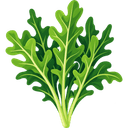
Arugula
Eruca vesicaria
Peppery salad green that grows quickly from seed. Best in cool weather; bolt-resistant varieties extend the harvest window.
Overview
Companion Planting
Good Companions
 Carrot
 Lettuce
 Nasturtium
Bad Companions
None
Toxicity
Non-toxic to humans, dogs, and cats; safe to consume, though large amounts may cause mild GI upset in pets due to nitrates and oxalates.
Planting Tips
1 cm of water per m² equals 10 liters. Use the Watering Calculator for exact amounts.
Care Tip: Sow successionally every 2-3 weeks for continuous harvest and apply a 5 cm mulch layer to regulate soil temperature and prevent bolting.
Common Pests
Flea Beetles
Symptoms: Tiny round holes scattered across leaves, especially severe on young seedlings.
Treatment: Apply neem oil or insecticidal soap; use diatomaceous earth around the base of plants.
Prevention: Cover seedlings with floating row covers and practice crop rotation.
Aphids
Symptoms: Curled, yellowing leaves and sticky honeydew residue on foliage.
Treatment: Spray with insecticidal soap or a strong jet of water to dislodge colonies.
Prevention: Interplant with strong-scented herbs like basil or dill and encourage beneficial insects such as ladybugs.
Cabbage Loopers
Symptoms: Large, irregular holes chewed in leaves; green caterpillars visible on undersides.
Treatment: Hand-pick caterpillars or apply Bacillus thuringiensis (Bt) spray.
Prevention: Use floating row covers and inspect plants regularly for eggs on leaf undersides.
Common Diseases
Downy Mildew
Symptoms: Yellow or white spots on upper leaf surfaces with grayish-purple fuzzy growth on undersides.
Treatment: Remove and destroy infected leaves; apply copper-based fungicide if severe.
Prevention: Ensure good air circulation, avoid overhead watering, and space plants adequately.
Powdery Mildew
Symptoms: White, powdery coating on leaf surfaces that stunts growth and reduces vigor.
Treatment: Spray with a baking soda solution (1 tsp per liter water) or neem oil.
Prevention: Avoid crowding plants, water at soil level, and ensure adequate sunlight exposure.
Black Rot
Symptoms: V-shaped yellow-orange lesions forming on leaf edges that spread inward, causing wilting.
Treatment: Remove and destroy affected plants immediately; no chemical cure is effective once established.
Prevention: Rotate brassica crops on a 2-3 year cycle and use certified disease-free seed.