
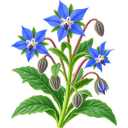
Borage
Borago officinalis
Star-shaped blue flowers attract pollinators and are edible. Self-seeds freely and is considered a top companion for strawberries.
Overview
Companion Planting
Good Companions
 Strawberry
 Tomato
 Zucchini
 Pumpkin
 Blackberry
Bad Companions
None
Toxicity
Contains pyrrolizidine alkaloids and tannins; ingestion by pets may cause vomiting, diarrhea, drooling, and contact dermatitis. Generally safe for humans in culinary quantities.
Planting Tips
1 cm of water per m² equals 10 liters. Use the Watering Calculator for exact amounts.
Care Tip: Self-seeds prolifically; deadhead spent flowers to control spread. Space plants 30-45 cm apart.
Common Pests
Aphids
Symptoms: Clusters of small insects on stems and leaf undersides; sticky honeydew residue and curled or distorted new growth.
Treatment: Spray with a strong jet of water or apply insecticidal soap; introduce ladybugs or lacewings as biological control.
Prevention: Encourage beneficial insects; avoid excessive nitrogen fertilization that promotes soft, attractive growth.
Spider Mites
Symptoms: Fine webbing on leaf undersides; yellowing, stippled leaves that may dry out and drop.
Treatment: Spray foliage with water to dislodge mites; apply neem oil or insecticidal soap in severe cases.
Prevention: Maintain adequate humidity and watering; avoid dusty, hot conditions near the plant.
Slugs and Snails
Symptoms: Irregular holes chewed in leaves, especially on young seedlings; slimy trails on and around plants.
Treatment: Hand-pick at dusk; use iron-phosphate-based slug pellets or beer traps.
Prevention: Remove garden debris; use copper tape barriers around seedlings and avoid overhead watering in the evening.
Common Diseases
Powdery Mildew
Symptoms: White, powdery coating on leaves and stems; affected leaves may yellow and drop prematurely.
Treatment: Remove and destroy affected foliage; apply a sulfur- or potassium-bicarbonate-based fungicide.
Prevention: Ensure good air circulation by proper spacing; plant in full sun and avoid overhead watering.
Root Rot
Symptoms: Wilting despite moist soil; yellowing lower leaves; soft, brown, mushy roots when inspected.
Treatment: Remove affected plants and improve drainage; no chemical cure once established. Replant in well-draining soil.
Prevention: Plant in well-draining soil; avoid overwatering and waterlogged conditions.
Leaf Spot
Symptoms: Dark brown or black circular spots on leaves, sometimes with a yellow halo; heavy infection causes leaf drop.
Treatment: Remove and destroy infected leaves; apply copper-based fungicide if spread is severe.
Prevention: Water at soil level to keep foliage dry; ensure adequate spacing for air circulation.