
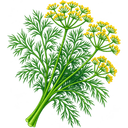
Dill
Anethum graveolens
Feathery herb prized for its leaves and seeds. Attracts beneficial insects and makes an excellent companion for cucumbers.
Overview
Companion Planting
 Cucumber
 Cabbage
 Lettuce
 Tomato
 Carrot
Toxicity
Non-toxic to humans, dogs, and cats according to the ASPCA; large quantities may cause mild stomach upset, and concentrated essential oil can irritate skin and eyes.
Planting Tips
1 cm of water per m² equals 10 liters. Use the Watering Calculator for exact amounts.
Care Tip: Direct-sow seeds as dill does not transplant well; thin seedlings to 25-30 cm apart and mulch to retain moisture.
Common Pests
Aphids
Symptoms: Clusters of small insects on leaves and shoot tips causing curled, distorted, and stunted growth; sticky honeydew residue.
Treatment: Spray with a strong jet of water or apply insecticidal soap; neem oil works for heavier infestations.
Prevention: Encourage natural predators like ladybugs and lacewings; avoid excessive nitrogen fertilization.
Tomato / Parsley Hornworm
Symptoms: Large caterpillars chewing through foliage and stems, leaving behind stripped branches and dark droppings.
Treatment: Hand-pick caterpillars; apply Bacillus thuringiensis (Bt) for severe infestations.
Prevention: Inspect plants regularly; rotate crops and till soil in autumn to destroy overwintering pupae.
Armyworm
Symptoms: Ragged, chewed leaves and rapid defoliation, especially by young larvae feeding in groups.
Treatment: Hand-pick larvae; apply Bt or spinosad-based sprays for larger outbreaks.
Prevention: Remove weeds and debris that shelter eggs; use row covers early in the season.
Common Diseases
Damping-off
Symptoms: Seedlings collapse at the soil line, stems become water-soaked and thin; seeds may rot before emergence.
Treatment: Remove affected seedlings immediately; drench soil with a fungicide containing copper or mefenoxam.
Prevention: Use sterile seed-starting mix, avoid overwatering, ensure good air circulation, and do not sow too densely.
Powdery Mildew
Symptoms: White, powdery fungal coating on leaves and stems; leaves may yellow and drop prematurely.
Treatment: Apply sulfur-based or potassium bicarbonate fungicide; remove and dispose of heavily infected foliage.
Prevention: Space plants adequately for airflow; water at the base rather than overhead; avoid shady, humid locations.
Alternaria Leaf Spot (Cercospora / Alternaria Blight)
Symptoms: Dark brown to black spots with concentric rings on leaves; spots may merge and cause extensive leaf dieback.
Treatment: Apply copper-based fungicide; remove and destroy infected plant material.
Prevention: Practice crop rotation (3-year cycle); use disease-free seed; avoid overhead irrigation.