
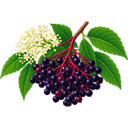
Elderberry
Sambucus nigra
Large native shrub with fragrant flower clusters and dark purple berries. Flowers make elderflower cordial; berries must be cooked before eating.
Overview
Companion Planting
Good Companions
None
Bad Companions
None
Toxicity
All parts except ripe, cooked berries and cooked flowers contain cyanogenic glycosides (sambunigrin); ingestion of raw berries, leaves, bark, or roots can cause nausea, vomiting, and diarrhea.
Planting Tips
1 cm of water per m² equals 10 liters. Use the Watering Calculator for exact amounts.
Care Tip: Prune out dead or weak canes in late winter; remove canes older than three years to encourage vigorous new fruiting wood.
Common Pests
Elder Aphid (Aphis sambuci)
Symptoms: Clusters of dark aphids on shoot tips and leaf undersides causing curled, distorted leaves and sticky honeydew.
Treatment: Spray with insecticidal soap or a strong water jet to dislodge colonies.
Prevention: Encourage natural predators such as ladybugs and lacewings; avoid excessive nitrogen fertilization.
Elderberry Borer (Desmocerus palliatus)
Symptoms: Wilting or dying canes with sawdust-like frass at the base; larvae tunnel inside stems.
Treatment: Prune and destroy infested canes below the entry hole; no effective chemical treatment once larvae are inside.
Prevention: Remove old or damaged canes promptly; keep plants healthy to tolerate minor damage.
Spider Mites
Symptoms: Fine stippling or bronzing on leaves, tiny webbing on leaf undersides, especially in hot dry weather.
Treatment: Spray with horticultural oil or insecticidal soap, ensuring thorough coverage of leaf undersides.
Prevention: Maintain adequate watering and humidity; avoid dusty conditions near plants.
Common Diseases
Powdery Mildew
Symptoms: White powdery coating on leaves, shoots, and flower clusters, leading to distorted growth.
Treatment: Apply a sulfur-based or potassium bicarbonate fungicide at first sign of infection.
Prevention: Ensure good air circulation by spacing plants adequately and pruning dense growth; avoid overhead watering.
Verticillium Wilt
Symptoms: Sudden wilting and yellowing of leaves on one side of the plant; brown streaking visible in cut stems.
Treatment: No chemical cure; remove and destroy affected plants and do not replant elderberry in the same spot.
Prevention: Plant in well-drained soil free of the pathogen; rotate planting sites and avoid areas where solanaceous crops grew.
Leaf Spot (Cercospora, Septoria)
Symptoms: Brown or purplish spots on leaves, sometimes with yellow halos, leading to premature leaf drop.
Treatment: Remove and destroy fallen leaves; apply a copper-based fungicide if infection is severe.
Prevention: Maintain good sanitation by clearing plant debris; ensure adequate spacing for air flow.