
All Plants
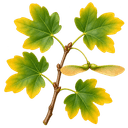
Field Maple
Acer campestre
Shade treeDeciduousFrost Hardy
Field maple is a native, medium-sized European tree with small three- to five-lobed leaves, corky ridges on the twigs and long-lasting yellow autumn colour. It tolerates heat, dry soils and pruning, which makes it suitable both as a small shade tree and as a hedge, and its flowers are a bee pasture.
Overview
Height10–15 m
Crown diameter7–15 m
Root systemHeart-rooted
ShadeMedium shade
SunPartial Shade
WaterLow
HardinessUSDA zones 5–8
Seasons
Flowering (Central Europe)Apr, May
Planting time for bare-root trees. Container trees can be planted whenever the soil is workable.
Companion Planting
Good Companions
None
Bad Companions
None
Only relations with a documented cause are listed.
Toxicity
SeverityNon-toxic
Listed as not toxic (as a rule) by the nursery data sheet; no ASPCA entry for Acer campestre was found.
Planting Tips
LocationSun to partial shade (a semi-shade-tolerant species); wind-firm and tolerant of urban and partly sealed sites.
SoilAll soil types except dry, poor sands; copes with heavy clay and calcareous soils, tolerates brief flooding.
WateringHas intermediate drought resistance once established; water young trees in dry periods.
FertilizingNo species-specific fertiliser requirement documented in the sources used.
Care Tip: Tolerates hard pruning (hedges), but cut outside the early-spring sap flow period. Generally low susceptibility to pests and diseases.
Sources
- GALK-Straßenbaumliste (PDF export, queried 12.10.2026) — Deutsche Gartenamtsleiterkonferenz (GALK), Arbeitskreis Stadtbäume
- Van den Berk tree sheet: Acer campestre — Boomkwekerij Gebr. Van den Berk B.V. (tree nursery)
- Baumartensteckbrief Feldahorn (Acer campestre) — Nordwestdeutsche Forstliche Versuchsanstalt (NW-FVA)
- NC State Extension Plant Toolbox: Acer campestre — North Carolina State University Extension