
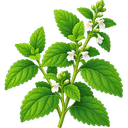
Lemon Balm
Melissa officinalis
Lemon-scented perennial that spreads readily by self-seeding. Excellent for herbal teas and attracting pollinators to the garden.
Overview
Companion Planting
 Tomato
 Broccoli
Toxicity
Non-toxic to humans, dogs, and cats according to the ASPCA; large quantities of any foliage may cause mild, short-lived stomach upset.
Planting Tips
1 cm of water per m² equals 10 liters. Use the Watering Calculator for exact amounts.
Care Tip: Pinch off stem tips and harvest leaves frequently to encourage bushy growth; contain spreading by growing in pots or using root barriers.
Common Pests
Aphids
Symptoms: Curled or yellowing leaves, sticky honeydew residue on foliage, and stunted new growth.
Treatment: Spray with a strong jet of water or apply insecticidal soap; for heavy infestations use neem oil.
Prevention: Encourage beneficial insects like ladybugs and lacewings; avoid excessive nitrogen fertilization.
Spider Mites
Symptoms: Fine webbing on leaf undersides, stippled or bronzed leaves, and overall plant decline in hot, dry conditions.
Treatment: Spray leaf undersides with water or apply neem oil or insecticidal soap at weekly intervals.
Prevention: Maintain adequate humidity and air circulation; regularly mist foliage during dry spells.
Whiteflies
Symptoms: Tiny white flying insects on leaf undersides, yellowing leaves, and sticky honeydew that may develop sooty mold.
Treatment: Use yellow sticky traps and apply insecticidal soap or neem oil to affected plants.
Prevention: Inspect new plants before introducing them to the garden; encourage natural predators such as parasitic wasps.
Common Diseases
Powdery Mildew
Symptoms: White powdery coating on leaves and stems, often starting on older foliage; leaves may curl and brown.
Treatment: Remove affected leaves and apply a fungicide or a baking-soda spray (1 tsp per liter of water with a drop of dish soap).
Prevention: Ensure good air circulation by spacing plants 30-45 cm apart and thinning dense growth regularly.
Septoria Leaf Spot
Symptoms: Small, dark-brown to black spots with lighter centers appearing on lower leaves, which may yellow and drop.
Treatment: Remove and destroy infected leaves; apply a copper-based fungicide if the problem persists.
Prevention: Water at the base of the plant to keep foliage dry; avoid overhead irrigation and practice crop rotation.
Root Rot
Symptoms: Yellowing and wilting leaves despite adequate watering, mushy or dark-colored roots, and stunted growth.
Treatment: Remove the plant, trim away rotted roots, and replant in fresh, well-drained soil; reduce watering frequency.
Prevention: Use well-draining soil and containers with drainage holes; never let the plant sit in standing water.