
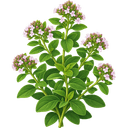
Marjoram
Origanum majorana
Sweet, milder cousin of oregano that is treated as an annual in colder climates. Excellent dried herb for Mediterranean dishes.
Overview
Companion Planting
Good Companions
 Pea
Pea Green Bean
Bad Companions
None
Toxicity
Contains gastrointestinal irritants that can cause vomiting and diarrhea in dogs and cats; safe for humans in normal culinary amounts.
Planting Tips
1 cm of water per m² equals 10 liters. Use the Watering Calculator for exact amounts.
Care Tip: Start seeds indoors in late winter and transplant after last frost when soil is at least 15 °C; pinch back flowers to encourage bushier growth.
Common Pests
Aphids (Myzus persicae)
Symptoms: Sticky honeydew on leaves, yellowing or curling foliage, stunted growth.
Treatment: Spray with a strong water jet or apply insecticidal soap; introduce ladybugs as natural predators.
Prevention: Inspect plants regularly, avoid excessive nitrogen fertilization, and encourage beneficial insects.
Spider Mites
Symptoms: Fine webbing on undersides of leaves, stippled or bronzed foliage, leaf drop in severe cases.
Treatment: Spray foliage with water to dislodge mites; apply neem oil or insecticidal soap if infestation persists.
Prevention: Maintain adequate humidity around plants and avoid drought stress; remove heavily infested leaves promptly.
Common Diseases
Root Rot (Rhizoctonia solani / Fusarium spp.)
Symptoms: Wilting despite moist soil, brown or mushy roots, yellowing lower leaves and plant collapse.
Treatment: Remove and destroy affected plants; drench soil with an approved fungicide and improve drainage immediately.
Prevention: Plant in well-drained soil, avoid overwatering, and rotate planting locations each season.
Rust (Puccinia spp.)
Symptoms: Small orange-brown pustules on undersides of leaves, yellowing and premature leaf drop.
Treatment: Remove and destroy infected foliage; apply a copper-based fungicide if the outbreak is severe.
Prevention: Ensure good air circulation by spacing plants adequately and avoid overhead watering.
Botrytis Blight (Gray Mold)
Symptoms: Gray fuzzy mold on stems and leaves, soft brown lesions, especially in cool damp conditions.
Treatment: Prune affected parts and improve air flow; apply a fungicide labeled for Botrytis if necessary.
Prevention: Avoid overcrowding, water at the base rather than overhead, and remove plant debris promptly.