
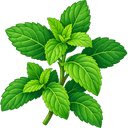
Mint
Mentha spicata
Vigorous, spreading perennial best grown in containers to prevent it from taking over the garden. Excellent for teas and cooking.
Overview
Companion Planting
 Cabbage
 Broccoli
 Pea
Pea Parsley
 Cucumber
 Chamomile
Toxicity
Garden mint (Mentha spp.) is non-toxic to humans and widely used as a culinary herb; however, the ASPCA lists it as toxic to dogs, cats, and horses due to essential oils that can cause vomiting and diarrhea if ingested in large quantities.
Planting Tips
1 cm of water per m² equals 10 liters. Use the Watering Calculator for exact amounts.
Care Tip: Contain roots by planting in pots or using buried barriers; harvest regularly to encourage bushy growth and prevent legginess.
Common Pests
Spider Mites (Two-Spotted Spider Mite)
Symptoms: Fine webbing on leaves, yellow or bronzed stippling, tiny moving dots on leaf undersides.
Treatment: Spray with neem oil or a plant-based miticide such as rosemary oil; blast leaves with a strong stream of water.
Prevention: Maintain adequate humidity around plants; avoid water stress and overcrowding; introduce predatory mites.
Aphids
Symptoms: Curled or distorted new growth, sticky honeydew residue on leaves, and sooty mold development.
Treatment: Apply insecticidal soap or neem oil; dislodge aphids with a strong water spray.
Prevention: Encourage beneficial insects like ladybugs and lacewings; avoid excessive nitrogen fertilization.
Thrips
Symptoms: Silvery streaks or stippling on leaves, black speckling (frass), and distorted growth.
Treatment: Spray neem oil or insecticidal soap; remove heavily infested leaves.
Prevention: Keep the area free of plant debris; use reflective mulch to deter thrips; inspect new plants before introducing them.
Common Diseases
Mint Rust (Puccinia menthae)
Symptoms: Dusty orange, yellow, and black pustules on leaves and stems; distorted shoots in spring.
Treatment: Remove and destroy all infected stems and rhizomes promptly; do not compost infected material.
Prevention: Ensure good air circulation; avoid overhead watering; propagate only from disease-free stock.
Powdery Mildew
Symptoms: White powdery coating on leaves and stems; affected foliage turns brown and shrivels.
Treatment: Apply a baking-soda spray (1 tsp per liter of water) or sulfur-based fungicide; remove badly affected leaves.
Prevention: Space plants for good airflow; water at soil level rather than overhead; avoid excessive shade.
Verticillium Wilt
Symptoms: Progressive wilting, yellowing, and browning of leaves, often on one side of the plant; stunted growth.
Treatment: No chemical cure; remove and destroy infected plants along with surrounding soil.
Prevention: Plant in disease-free soil; rotate crops on a 3-4 year cycle; use certified disease-free transplants.