
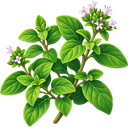
Oregano
Origanum vulgare
Mediterranean herb with intensely flavored leaves that dry well. Cut back hard in spring to encourage fresh, compact growth.
Overview
Companion Planting
Good Companions
 Broccoli
 Cauliflower
 Sweet Potato
 Grape
GrapeBad Companions
None
Toxicity
Contains gastrointestinal irritants that can cause vomiting and diarrhea in pets; concentrated forms like essential oil are more dangerous. Safe for humans at culinary amounts.
Planting Tips
1 cm of water per m² equals 10 liters. Use the Watering Calculator for exact amounts.
Care Tip: Trim back by two-thirds after flowering to encourage bushy new growth and prevent the plant from becoming leggy and woody.
Common Pests
Aphids
Symptoms: Stunted growth, yellowing and distorted leaves, sticky honeydew residue on foliage.
Treatment: Dislodge with a strong water spray; for persistent infestations apply insecticidal soap or neem oil to leaf undersides.
Prevention: Encourage beneficial insects like ladybugs and lacewings; avoid over-fertilizing which promotes soft, aphid-attracting growth.
Spider Mites
Symptoms: Fine webbing on leaf undersides, stippled or bronzed yellowing foliage, overall plant decline.
Treatment: Spray with neem oil or insecticidal soap; introduce predatory mites for biological control.
Prevention: Maintain adequate humidity around plants and keep foliage dust-free; avoid drought stress which favors mite outbreaks.
Leaf Miners
Symptoms: Meandering tan or brown trails (mines) visible inside leaves as larvae feed between leaf surfaces.
Treatment: Remove and destroy affected leaves before larvae mature; no effective chemical spray once larvae are inside the leaf.
Prevention: Use floating row covers to exclude adult flies; remove plant debris at end of season to reduce overwintering pupae.
Common Diseases
Botrytis Rot (Gray Mold)
Symptoms: Older interior leaves develop gray fuzzy mold and begin to rot, spreading outward through the plant.
Treatment: Remove and destroy infected plant material immediately; severely infected plants should be fully removed to prevent spread.
Prevention: Ensure good air circulation by spacing plants adequately; avoid overhead watering and water at the base instead.
Root Rot (Rhizoctonia)
Symptoms: Gradual wilting despite adequate watering; brown or black discoloration at the stem base and roots.
Treatment: No cure once established; remove and destroy the plant and do not replant oregano in the same spot for at least three years.
Prevention: Plant in well-draining soil, avoid overwatering, and ensure containers have adequate drainage holes.
Rust
Symptoms: Small circular orange-brown pustules on leaf undersides and stems, leading to leaf yellowing and drop.
Treatment: Prune and destroy affected foliage promptly; apply a sulfur-based or copper fungicide if caught early.
Prevention: Avoid wetting foliage when watering; space plants for airflow and remove fallen debris around the base.