
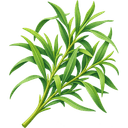
Tarragon
Artemisia dracunculus
French tarragon is propagated from cuttings or division, not seed. Its anise-like flavor is essential in French cuisine.
Overview
Companion Planting
 Artichoke
 Eggplant
Toxicity
Contains estragole, methyl eugenol, and other essential oils; safe for humans in culinary amounts but toxic to dogs and cats, causing vomiting, diarrhea, and lethargy if ingested.
Planting Tips
1 cm of water per m² equals 10 liters. Use the Watering Calculator for exact amounts.
Care Tip: Divide plants every 2-3 years to maintain vigor; mulch lightly in winter in colder climates and ensure good air circulation.
Common Pests
Spider Mites
Symptoms: Small light-colored specks on leaves, leaf discoloration and scorching, fine downy webs on undersides of leaves.
Treatment: Spray plants with a strong jet of water; apply insecticidal soap or neem oil if infestation persists.
Prevention: Maintain adequate humidity and good air circulation; encourage natural predators like ladybugs.
Aphids
Symptoms: Clusters of small soft-bodied insects on stems and new growth; sticky honeydew residue on leaves and curling foliage.
Treatment: Blast off with water spray; apply neem oil or insecticidal soap for heavier infestations.
Prevention: Attract beneficial insects such as lacewings and ladybugs; avoid over-fertilizing with nitrogen.
Whiteflies
Symptoms: Tiny white flying insects on leaf undersides; yellowing leaves and sticky honeydew deposits.
Treatment: Use yellow sticky traps to reduce populations; apply neem oil or insecticidal soap to affected foliage.
Prevention: Inspect new plants before adding to the garden; maintain good air circulation around plants.
Common Diseases
Downy Mildew
Symptoms: Yellow or brownish spots on upper leaf surfaces with grayish-white fuzzy growth on undersides; leaves eventually darken and die.
Treatment: Remove and destroy infected foliage immediately; apply copper-based or sulfur fungicide every 10 days.
Prevention: Improve air circulation by proper spacing; avoid overhead watering and keep leaves dry.
Powdery Mildew
Symptoms: White powdery coating on leaves and stems; affected leaves may curl, yellow, and drop prematurely.
Treatment: Remove affected foliage; apply sulfur-based fungicide or a baking soda spray solution.
Prevention: Ensure good air circulation and adequate sunlight; avoid overcrowding plants.
Root Rot
Symptoms: Wilting despite moist soil, yellowing leaves, mushy darkened roots, and stunted growth.
Treatment: Remove plant from soil, trim decayed roots, and replant in fresh well-drained soil; reduce watering frequency.
Prevention: Plant in well-drained soil; avoid waterlogging and ensure containers have drainage holes.