
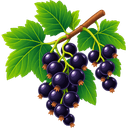
Black Currant
Ribes nigrum
Rich in vitamin C, producing dark, intensely flavored berries. Prune out one-third of old wood each winter to encourage new fruiting shoots.
Overview
Companion Planting
 Chives
 Garlic
 Marigold
Toxicity
All parts of Ribes nigrum are non-toxic; berries, leaves, and buds are safe for humans, dogs, and cats. Do not confuse with dried 'currants' (Zante currants from Vitis vinifera), which are toxic to dogs.
Planting Tips
1 cm of water per m² equals 10 liters. Use the Watering Calculator for exact amounts.
Care Tip: Prune in late winter by removing about one-third of the oldest stems at ground level each year to encourage vigorous new fruiting wood.
Common Pests
Big Bud Mite (Cecidophyopsis ribis)
Symptoms: Buds become abnormally swollen and rounded in winter and fail to open in spring; also transmits reversion virus.
Treatment: Remove and destroy infested swollen buds by hand; severely affected bushes should be dug up and replaced with certified stock.
Prevention: Plant certified mite-free stock and inspect bushes in winter for swollen buds; no chemical controls are available to home gardeners.
Currant Blister Aphid (Cryptomyzus ribis)
Symptoms: Leaves develop raised red or yellow blisters on the upper surface and curl downward; aphid colonies visible on undersides.
Treatment: Spray with insecticidal soap or neem oil when aphids are first noticed in spring before leaves curl tightly.
Prevention: Encourage natural predators such as ladybugs and lacewings; prune to improve air circulation.
Gooseberry Sawfly (Nematus ribesii)
Symptoms: Pale green caterpillar-like larvae rapidly strip leaves from the center of the bush outward, sometimes defoliating it entirely.
Treatment: Hand-pick larvae on sight; apply an approved contact insecticide if infestation is severe.
Prevention: Inspect the interior of bushes from late April onward; clear fallen leaves and debris in autumn to reduce overwintering pupae.
Common Diseases
Powdery Mildew (Podosphaera mors-uvae)
Symptoms: White powdery coating on young leaves, shoot tips, and fruit; affected shoots may become distorted.
Treatment: Prune out and destroy infected shoots; apply a sulfur-based or potassium bicarbonate fungicide at first signs.
Prevention: Ensure good air circulation through regular pruning; avoid overhead watering and choose resistant cultivars like 'Ben Hope'.
Reversion Disease
Symptoms: Leaves become smaller with fewer serrations, flowers turn bright magenta, and fruit yield drops dramatically over successive years.
Treatment: No cure exists; infected bushes must be dug up and destroyed to prevent spread.
Prevention: Control big bud mite (the vector); plant only certified virus-free stock and inspect annually for swollen buds.
Leaf Spot (Drepanopeziza ribis)
Symptoms: Small dark-brown spots appear on leaves in early summer, expanding and merging; severely affected leaves yellow and drop prematurely.
Treatment: Remove and destroy fallen leaves; apply a copper-based fungicide in spring if infection was severe the previous year.
Prevention: Rake up and compost or burn fallen leaves in autumn; maintain open bush structure to improve airflow.