
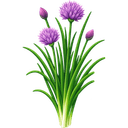
Chives
Allium schoenoprasum
Hardy perennial herb with mild onion flavor and attractive purple flowers. Divide clumps every few years to maintain vigor.
Overview
Companion Planting
 Carrot
 Tomato
 Lettuce
 Parsley
 Gooseberry
 Red Currant
 Black Currant
 Grape
GrapeBad Companions
 Pea
Pea Green Bean
Toxicity
All Allium species contain N-propyl disulfide and thiosulfates, which can cause oxidative damage to red blood cells (Heinz body anemia) in dogs and cats. Chives are listed as toxic to dogs, cats, and horses by the ASPCA. Safe for humans in culinary quantities.
Planting Tips
1 cm of water per m² equals 10 liters. Use the Watering Calculator for exact amounts.
Care Tip: Divide clumps every 3–4 years in spring or autumn to maintain vigor. Remove flower heads after blooming to prevent self-seeding and encourage leaf production. Cut leaves to 5 cm above the soil to harvest; they regrow quickly.
Common Pests
Onion Thrips (Thrips tabaci)
Symptoms: Silvery-white streaks or stippling on leaves. Leaves may become distorted, curled, or bleached. Severe infestations cause stunted growth.
Treatment: Spray with insecticidal soap or neem oil. For heavy infestations, use spinosad-based insecticides. Remove and destroy heavily infested foliage.
Prevention: Use reflective mulch to deter thrips. Encourage natural predators such as lacewings and predatory mites. Avoid excessive nitrogen fertilization. Remove plant debris at end of season.
Aphids (Myzus ascalonicus / Neotoxoptera formosana)
Symptoms: Clusters of small green, black, or pink insects on new growth. Sticky honeydew on leaves, sometimes followed by sooty mold. Distorted or curled young leaves.
Treatment: Blast with a strong stream of water. Apply insecticidal soap or neem oil. Introduce ladybugs or lacewings as biological control.
Prevention: Avoid over-fertilizing with nitrogen. Inspect plants regularly. Companion-plant with nasturtiums or marigolds to attract aphids away from chives.
Onion Fly / Allium Leaf Miner (Phytomyza gymnostoma)
Symptoms: Lines of small puncture marks on leaves. Larvae mine inside leaves creating visible tunnels. Pupae visible at the base of plants. Wilting and collapsed leaves in severe cases.
Treatment: Remove and destroy affected leaves. There are no effective chemical treatments once larvae are inside the leaf tissue. Use biological controls where available.
Prevention: Cover plants with fine insect-proof mesh (Enviromesh) during the two flight periods (March–April and October–November). Practice crop rotation. Remove and destroy all affected plant material.
Common Diseases
Downy Mildew (Peronospora destructor)
Symptoms: Pale green to yellow patches on leaves, often with a grayish-purple fuzzy growth on the underside. Leaves may collapse and die back from the tips.
Treatment: Remove and destroy infected foliage immediately. Apply copper-based fungicide as a preventive measure. Improve air circulation around plants.
Prevention: Ensure good air circulation by spacing plants adequately. Avoid overhead watering; water at the base of plants in the morning. Remove plant debris at end of season. Practice crop rotation with non-Allium crops.
Rust (Puccinia allii)
Symptoms: Small orange to reddish-brown raised pustules on leaves. Severe infections cause leaf yellowing and premature die-back. Reduced plant vigor.
Treatment: Remove and destroy all infected leaves. Apply a sulfur-based or approved fungicide at first sign of infection. Cut plants back hard and allow fresh, healthy regrowth.
Prevention: Avoid overcrowding; ensure good air flow. Water at the base, not overhead. Do not over-fertilize with nitrogen. Remove and dispose of all plant debris in autumn.
White Rot (Sclerotium cepivorum)
Symptoms: Yellowing and wilting of leaves, starting from the tips. White fluffy fungal growth at the base of the plant. Black sclerotia (tiny round bodies) visible in the white mycelium. Roots rot and plants can be easily pulled from the soil.
Treatment: No effective chemical cure once established. Remove and destroy all infected plants and surrounding soil. Do not compost infected material.
Prevention: Practice long crop rotation (at least 8 years for Allium crops on infected ground). Use only certified disease-free planting material. Avoid moving soil from infected areas. Clean tools thoroughly after working in affected beds.