
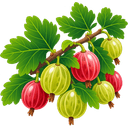
Gooseberry
Ribes uva-crispa
Hardy bush producing tart to sweet berries excellent for jams, pies, and fresh eating. Tolerates partial shade better than most fruit.
Overview
Companion Planting
 Chives
 Marigold
Toxicity
Ripe gooseberry fruits are edible for humans, dogs, and cats; unripe berries may cause mild stomach upset if eaten in large quantities due to high acidity.
Planting Tips
1 cm of water per m² equals 10 liters. Use the Watering Calculator for exact amounts.
Care Tip: Prune in late winter to an open goblet shape, removing old wood and crossing branches to improve air circulation and fruit quality.
Common Pests
Gooseberry Sawfly (Nematus ribesii)
Symptoms: Larvae rapidly defoliate bushes, leaving only leaf veins; caterpillar-like pale green larvae with black spots visible on undersides of leaves.
Treatment: Hand-pick larvae on sight; spray with pyrethrin-based insecticide for severe infestations.
Prevention: Inspect undersides of leaves from mid-spring onward; encourage natural predators such as ground beetles and birds.
Gooseberry Aphid (Aphis grossulariae)
Symptoms: Young leaves curl, pucker, and turn reddish; sticky honeydew and sooty mold may appear on foliage.
Treatment: Spray with insecticidal soap or a strong jet of water to dislodge aphids.
Prevention: Avoid excessive nitrogen fertilization; attract beneficial insects like ladybugs and lacewings.
Spider Mites (Tetranychus urticae)
Symptoms: Fine webbing on leaf undersides; leaves develop yellow stippling and may dry out and drop prematurely.
Treatment: Apply horticultural oil or miticide; increase humidity around plants with regular misting.
Prevention: Keep plants well-watered and avoid dusty conditions; remove heavily infested leaves promptly.
Common Diseases
American Gooseberry Mildew (Podosphaera mors-uvae)
Symptoms: White powdery coating on young shoots, leaves, and fruits that later turns brown and felt-like.
Treatment: Prune and destroy affected shoots; apply a sulfur-based or potassium bicarbonate fungicide at first sign of infection.
Prevention: Choose mildew-resistant cultivars (e.g. 'Invicta', 'Hinnonmäki Red'); ensure good air circulation through regular pruning.
Leaf Spot (Drepanopeziza ribis)
Symptoms: Dark brown or black spots on leaves, leading to premature leaf drop and weakened plants.
Treatment: Remove and destroy fallen leaves; apply copper-based fungicide in early spring before bud break.
Prevention: Practice good garden hygiene by clearing leaf litter in autumn; avoid overhead watering.
Botrytis (Grey Mold — Botrytis cinerea)
Symptoms: Fuzzy grey mold on ripening fruit and stems, especially in cool, damp weather; fruit rots on the bush.
Treatment: Remove and dispose of infected fruit and plant material immediately; improve air circulation around bushes.
Prevention: Avoid dense planting and excessive nitrogen; water at the base of plants rather than overhead.