
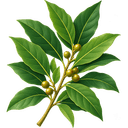
Bay Laurel
Laurus nobilis
Evergreen tree usually grown in containers in Central Europe. Aromatic leaves are used fresh or dried in soups, stews, and sauces.
Overview
Companion Planting
 Rosemary
 Thyme
ThymeToxicity
Contains eugenol and essential oils; ingestion may cause vomiting, diarrhea, and loss of appetite in pets. Leaves are safe for humans when used as a culinary herb but whole leaves should not be eaten due to choking or obstruction risk.
Planting Tips
1 cm of water per m² equals 10 liters. Use the Watering Calculator for exact amounts.
Care Tip: Prune regularly to maintain shape; shelter from cold winds in winter as it is hardy only to about -10 °C (USDA zone 8).
Common Pests
Bay Sucker (Trioza alacris)
Symptoms: Yellowing and thickening of leaf tissue, curled leaf margins, leaves turning brown and dropping.
Treatment: Remove and destroy affected leaves; apply insecticidal soap or neem oil in spring when nymphs are active.
Prevention: Inspect new growth regularly in spring; encourage natural predators and ensure good air circulation.
Scale Insects
Symptoms: Small brown or white bumps on stems and leaf undersides; sticky honeydew residue and sooty mold on foliage.
Treatment: Wipe off with a cloth dipped in rubbing alcohol or spray with horticultural oil during the dormant season.
Prevention: Avoid over-fertilizing with nitrogen; monitor plants regularly and remove heavily infested branches.
Aphids
Symptoms: Clusters of small green or black insects on new growth; curled, distorted leaves and sticky honeydew.
Treatment: Spray with a strong jet of water or apply insecticidal soap; introduce ladybugs as biological control.
Prevention: Encourage beneficial insects; avoid excessive nitrogen fertilization that promotes soft new growth.
Common Diseases
Phytophthora Root Rot
Symptoms: Wilting despite adequate watering, yellowing leaves, darkened and mushy roots, stunted growth.
Treatment: Remove affected roots, repot in fresh well-draining soil; apply a phosphonate-based fungicide.
Prevention: Ensure excellent drainage; avoid overwatering and do not let containers sit in standing water.
Powdery Mildew
Symptoms: White powdery coating on leaf surfaces, leaf distortion, and premature defoliation.
Treatment: Remove affected foliage; apply sulfur-based or potassium bicarbonate fungicide sprays.
Prevention: Provide good air circulation through pruning; avoid overhead watering and densely shaded locations.
Anthracnose
Symptoms: Sunken gray or brown patches on leaves and stems; leaves may develop dark spots and drop prematurely.
Treatment: Prune and destroy infected plant parts; apply copper-based fungicide during wet weather.
Prevention: Remove fallen debris around the base; ensure adequate spacing and air flow between plants.