
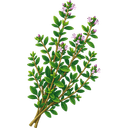
Thyme
Thymus vulgaris
Low-growing, woody herb ideal for borders and containers. Prefers well-drained, slightly alkaline soil and full sun.
Overview
Companion Planting
 Eggplant
 Brussels Sprouts
 Sweet Potato
 Strawberry
 Cabbage
 Lavender
 Bay Laurel
Bad Companions
None
Toxicity
Non-toxic to humans, dogs, and cats according to the ASPCA; however, concentrated thyme essential oil can cause irritation and should not be ingested undiluted.
Planting Tips
1 cm of water per m² equals 10 liters. Use the Watering Calculator for exact amounts.
Care Tip: Prune lightly after flowering to maintain shape and prevent woodiness; use thin mulch to suppress weeds but avoid trapping moisture near the crown.
Common Pests
Aphids
Symptoms: Clusters of small green or black insects on stems and leaf undersides; curled, yellowing leaves and sticky honeydew residue.
Treatment: Spray with a strong jet of water or apply insecticidal soap; neem oil can be used for heavier infestations.
Prevention: Encourage beneficial insects like ladybugs and lacewings; avoid over-fertilizing, which promotes tender growth aphids prefer.
Spider Mites
Symptoms: Fine webbing on leaf undersides, stippled or bronzed foliage, and overall plant wilting in hot, dry conditions.
Treatment: Rinse foliage with water regularly; apply miticidal soap or neem oil if populations persist.
Prevention: Maintain adequate humidity around plants and keep them well-watered during heat waves; avoid dusty conditions.
Thrips
Symptoms: Silver streaks or discolored patches on leaves caused by piercing and feeding on plant tissue.
Treatment: Apply insecticidal soap or spinosad-based sprays; remove and destroy heavily infested foliage.
Prevention: Use reflective mulch to deter thrips; remove plant debris and weeds that can harbor populations.
Common Diseases
Root Rot (Rhizoctonia)
Symptoms: Wilting, yellowing leaves, stunted growth, and soft or darkened roots; plant collapses despite adequate watering.
Treatment: Remove and destroy affected plants; improve drainage and reduce watering immediately for remaining plants.
Prevention: Plant in well-drained soil, avoid overwatering, and ensure containers have adequate drainage holes.
Gray Mold (Botrytis cinerea)
Symptoms: Fuzzy gray-brown fungal growth on leaves, stems, and flowers, especially in cool, humid conditions.
Treatment: Remove infected plant parts promptly; apply a copper-based fungicide if the infection spreads.
Prevention: Ensure good air circulation by proper spacing; water at the base of plants and avoid wetting foliage.
Alternaria Blight
Symptoms: Dark brown to black concentric ring-shaped spots on leaves that may enlarge and cause leaf drop.
Treatment: Prune and destroy affected foliage; apply an approved fungicide if the disease is severe.
Prevention: Avoid overhead watering, rotate plantings, and remove plant debris at the end of the season.