
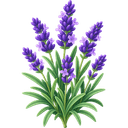
Lavender
Lavandula angustifolia
Fragrant Mediterranean shrub beloved by bees and butterflies. Thrives in hot, dry conditions and poor, well-drained soil.
Overview
Companion Planting
Good Companions
 Rosemary
 Thyme
Thyme Sage
Sage Echinacea
 Black-Eyed Susan
Bad Companions
None
Toxicity
Listed by ASPCA as toxic to dogs and cats. Contains linalool and linalyl acetate, which can cause nausea, vomiting, and reduced appetite in pets if ingested in quantity. Generally safe for humans and commonly used in culinary and cosmetic applications. Essential oil is more concentrated and poses a higher risk to pets than the plant itself.
Planting Tips
1 cm of water per m² equals 10 liters. Use the Watering Calculator for exact amounts.
Care Tip: Prune annually after flowering, cutting back about one-third of the current year's growth. Never cut into old, woody stems as they may not regrow. Deadhead spent blooms to encourage a second flush.
Common Pests
Aphids
Symptoms: Clusters of small green, black, or white insects on new growth and flower buds. Sticky honeydew residue on leaves, sometimes followed by sooty mold. Distorted or curling young leaves.
Treatment: Blast with a strong jet of water to dislodge. Apply insecticidal soap or neem oil spray. For severe infestations, use a pyrethrin-based insecticide.
Prevention: Encourage natural predators such as ladybugs and lacewings. Avoid excessive nitrogen fertilization, which promotes soft growth attractive to aphids. Inspect plants regularly in spring.
Spittlebugs (Froghoppers)
Symptoms: Frothy, white foam masses on stems and leaf axils, sheltering pale green nymphs inside. Minor stunting of affected shoots. Rarely causes serious damage.
Treatment: Remove foam and nymphs by hand or wash off with a strong water spray. Insecticidal treatment is usually unnecessary.
Prevention: Keep planting areas tidy and free of debris. Promote good air circulation by proper spacing. Inspect plants in late spring when nymphs are active.
Whiteflies
Symptoms: Tiny white winged insects on leaf undersides that fly up when disturbed. Yellowing and wilting of leaves. Sticky honeydew and potential sooty mold development.
Treatment: Apply insecticidal soap or neem oil to the undersides of leaves. Use yellow sticky traps to monitor and reduce adult populations. Repeat treatment every 5–7 days until controlled.
Prevention: Avoid overcrowding plants. Inspect new plants before introducing them to the garden. Encourage parasitic wasps (Encarsia formosa) as biological control.
Common Diseases
Root Rot (Phytophthora spp.)
Symptoms: Wilting despite adequate moisture. Yellowing and browning of lower leaves. Blackened, mushy roots when inspected. Sudden collapse of the entire plant in advanced cases.
Treatment: Remove and destroy affected plants — do not compost. Improve soil drainage before replanting. Apply a phosphonate-based fungicide to surrounding plants as a preventive measure.
Prevention: Ensure excellent soil drainage — amend heavy soils with grit or gravel. Avoid overwatering and waterlogged conditions. Plant in raised beds or mounds in areas with poor drainage.
Gray Mold (Botrytis cinerea)
Symptoms: Fuzzy gray-brown mold on flowers, stems, and leaves, especially in humid or wet conditions. Brown spots on petals. Soft, rotting tissue at the base of stems.
Treatment: Remove and dispose of all infected plant material. Improve air circulation by pruning and spacing plants. Apply a copper-based fungicide or a systemic fungicide in persistent cases.
Prevention: Space plants adequately for good airflow. Water at the base of the plant, never overhead. Prune regularly to keep plants open and airy. Avoid working with wet plants.
Shab Disease (Phomopsis lavandulae)
Symptoms: Wilting and browning of individual shoots from the tip downward. Dark brown to black lesions on stems near the base. Gradual dieback of affected branches; can kill entire plants if untreated.
Treatment: Cut out and destroy all infected stems, pruning well below the visible infection into healthy wood. Sterilize pruning tools between cuts with rubbing alcohol. No chemical fungicides are reliably effective.
Prevention: Buy certified disease-free stock. Ensure good air circulation and avoid overcrowding. Keep plants vigorous with proper pruning and avoid wounding stems.