
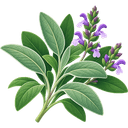
Sage
Salvia officinalis
Woody perennial with velvety, silver-green leaves. Prune annually to prevent the plant from becoming leggy and unproductive.
Overview
Companion Planting
Good Companions
 Carrot
 Rosemary
 Broccoli
 Cauliflower
 Brussels Sprouts
 Lavender
 Basil
Basil Cucumber
Toxicity
Listed as non-toxic to dogs, cats, and humans by the ASPCA. Safe in normal culinary amounts; however, concentrated sage essential oil can be harmful to cats due to their inability to metabolize certain compounds.
Planting Tips
1 cm of water per m² equals 10 liters. Use the Watering Calculator for exact amounts.
Care Tip: Prune woody stems in spring to encourage bushy new growth; replace plants every 3-4 years as they become too woody and less productive.
Common Pests
Spider Mites
Symptoms: Fine stippling or bronze discoloration on leaves; tiny webs on leaf undersides.
Treatment: Blast plant with a strong water spray every 2-3 days; apply insecticidal soap or neem oil for persistent infestations.
Prevention: Mist foliage regularly to raise humidity, as spider mites thrive in hot, dry conditions.
Aphids
Symptoms: Stunted growth, curled or distorted leaves, and sticky honeydew residue on foliage.
Treatment: Spray with insecticidal soap or neem oil; introduce natural predators such as ladybugs or lacewings.
Prevention: Avoid excess nitrogen fertilizer, which promotes soft new growth that attracts aphids.
Whiteflies
Symptoms: Yellow spots on leaves, wilting foliage, sticky honeydew that can develop into black sooty mold.
Treatment: Apply insecticidal soap or neem oil every 5 days for three applications; use yellow sticky traps to reduce populations.
Prevention: Inspect new plants before introducing them to the garden; encourage natural predators like parasitic wasps.
Common Diseases
Powdery Mildew
Symptoms: White, powdery coating on leaves, stems, and flowers; common during warm days followed by cool nights.
Treatment: Remove affected leaves immediately; spray with a baking soda or potassium bicarbonate solution, coating the entire plant.
Prevention: Ensure good air circulation by spacing plants adequately; avoid overhead watering.
Root Rot
Symptoms: Wilting despite moist soil, yellowing leaves, mushy or darkened roots, and overall plant decline.
Treatment: Remove and destroy infected plants; improve soil drainage by amending with perlite or coarse sand.
Prevention: Plant in well-drained soil; avoid overwatering and never let sage sit in waterlogged conditions.
Rust
Symptoms: Small bright orange, yellow, or brown pustules on leaf undersides; leaves may yellow, wilt, and drop prematurely.
Treatment: Remove and destroy infected foliage; apply a copper-based fungicide if the infection spreads.
Prevention: Water at the base of the plant to keep foliage dry; remove plant debris around sage to reduce fungal spore sources.