
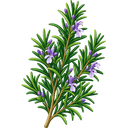
Rosemary
Salvia rosmarinus
Aromatic evergreen shrub that thrives in poor, well-drained soil. Its flowers attract pollinators and it repels many garden pests.
Overview
Companion Planting
Good Companions
 Carrot
 Sage
Sage Cabbage
 Lavender
 Bay Laurel
Bad Companions
None
Toxicity
ASPCA lists rosemary as non-toxic to dogs, cats, and horses; FDA classifies it as Generally Recognized as Safe for humans. Large amounts or concentrated essential oils may cause mild digestive upset in pets.
Planting Tips
1 cm of water per m² equals 10 liters. Use the Watering Calculator for exact amounts.
Care Tip: Prune after flowering to maintain shape and encourage bushy growth; ensure good air circulation between plants by spacing them 60-90 cm apart.
Common Pests
Aphids
Symptoms: Curled and distorted leaves, sticky honeydew residue on foliage, stunted new growth.
Treatment: Spray with a strong jet of water or apply insecticidal soap; neem oil works for persistent infestations.
Prevention: Encourage natural predators like ladybugs; avoid over-fertilizing which promotes tender growth aphids prefer.
Spider Mites
Symptoms: Fine stippling and yellowing of leaves, tiny webbing on undersides of foliage, eventual leaf drop.
Treatment: Spray foliage with water to dislodge mites; apply neem oil or insecticidal soap if infestation persists.
Prevention: Maintain adequate humidity around plants and ensure good air circulation; regularly inspect leaf undersides.
Scale Insects
Symptoms: Brown, bumpy growths on stems and leaves, sticky sap residue (honeydew), yellowing foliage.
Treatment: Remove manually with a cotton swab dipped in rubbing alcohol; apply horticultural oil for heavy infestations.
Prevention: Inspect new plants before introducing them to the garden; prune overcrowded branches to improve air flow.
Common Diseases
Root Rot
Symptoms: Wilting despite moist soil, yellowing and browning foliage, stunted growth, mushy dark roots.
Treatment: Dig up plant, prune infected roots, dust with fungicide powder, and replant in fresh well-draining soil.
Prevention: Ensure well-draining soil and containers with drainage holes; allow soil to dry between waterings.
Powdery Mildew
Symptoms: White, powdery coating on leaves and stems, distorted new growth, premature leaf drop.
Treatment: Apply organic fungicide or spray with a solution of 1 tbsp baking soda and a few drops of dish soap per quart of water.
Prevention: Space plants for good air circulation, avoid overhead watering, and ensure full sun exposure.
Botrytis Blight (Gray Mold)
Symptoms: Gray fuzzy mold on leaves and stems, soft rotting tissue, wilting branch tips especially in humid conditions.
Treatment: Remove and destroy affected plant parts; apply a copper-based fungicide if infection spreads.
Prevention: Avoid overwatering and overcrowding; prune to improve airflow and remove dead or damaged growth promptly.